







Handwork Festive Saree, How to Spot Real Craft Before You Buy

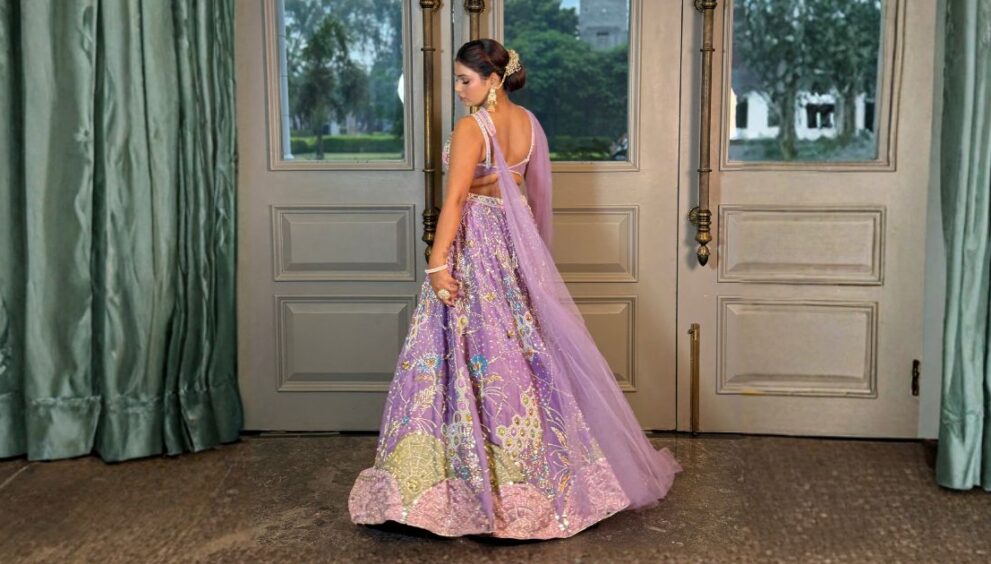
Two sarees can look almost identical in a photo and still be worlds apart when you hold them. One has embellishment stitched by hand, slowly, piece by piece. The other has machine work or glued decoration that looks fine for a season and then starts to lift. If you are investing in a handwork festive saree, it helps to know how to tell them apart.
Why handwork still matters
Hand embroidery is slower and costlier than machine work, so why bother? The answer is in how it looks and lasts.
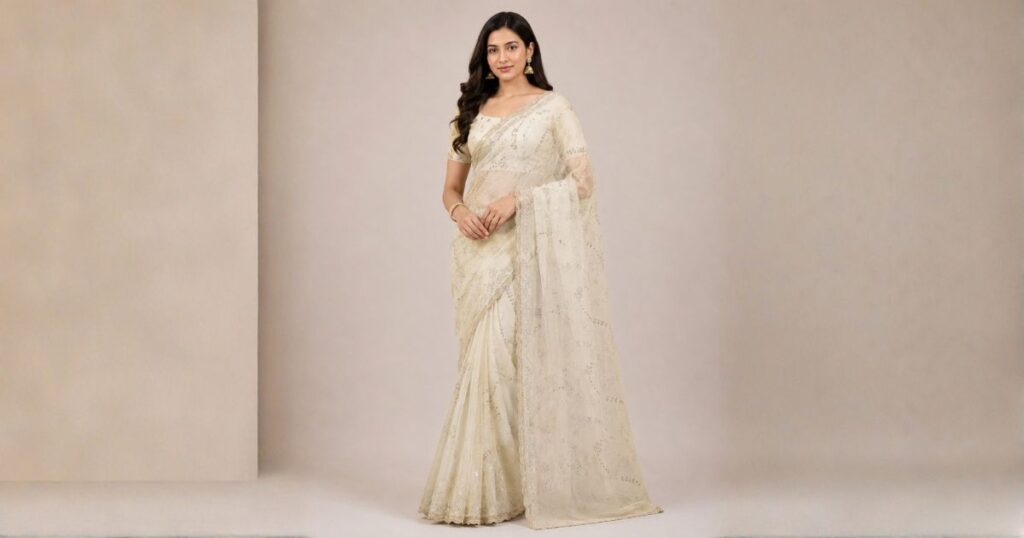
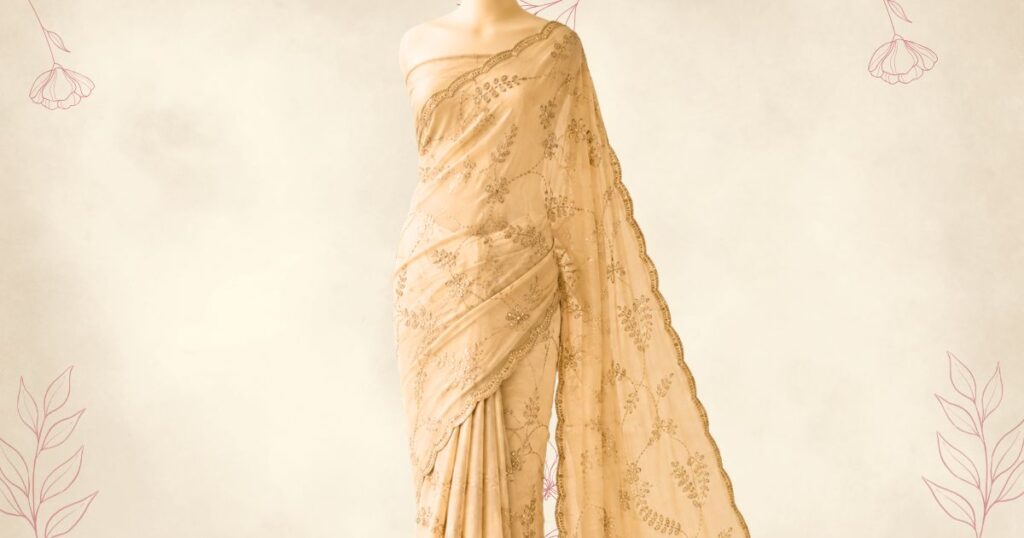
Hand-stitched work sits more naturally on the fabric. The stitches have tiny variations that give the design life, and the embellishment is anchored properly, so it moves with the saree instead of fighting it. A well-made handwork saree can be worn for years and passed on, while a poorly finished one often needs repairs after a few wears.
Gota work, kaccha and lumpy
Gota is a ribbon of woven metallic thread, traditionally from Rajasthan. Gota patti work cuts this ribbon into shapes like leaves and flowers and stitches them onto the fabric.
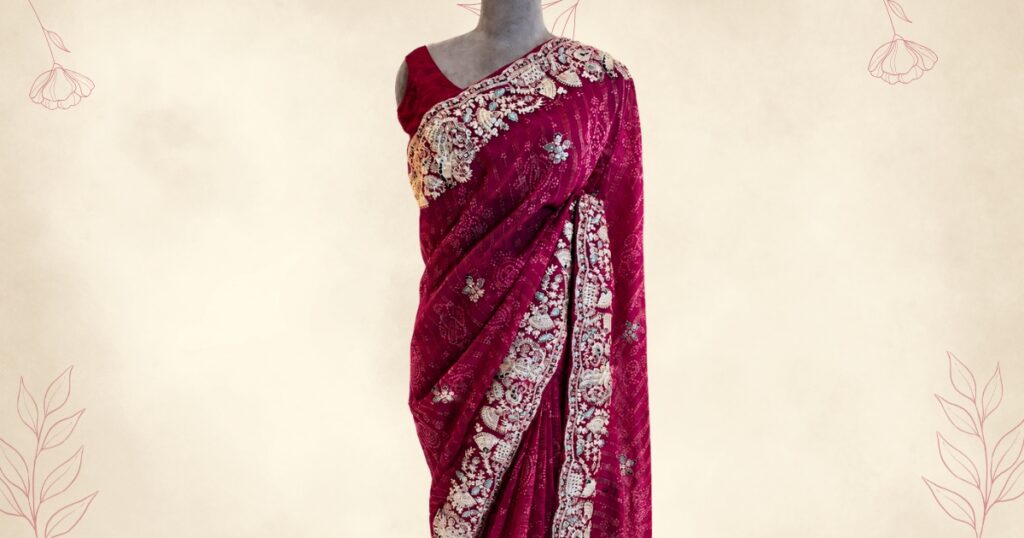
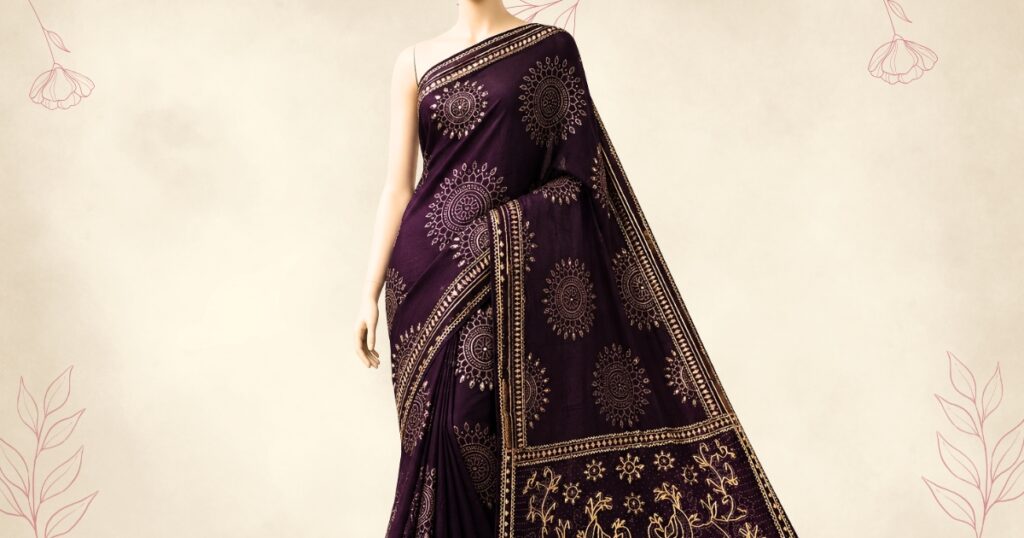
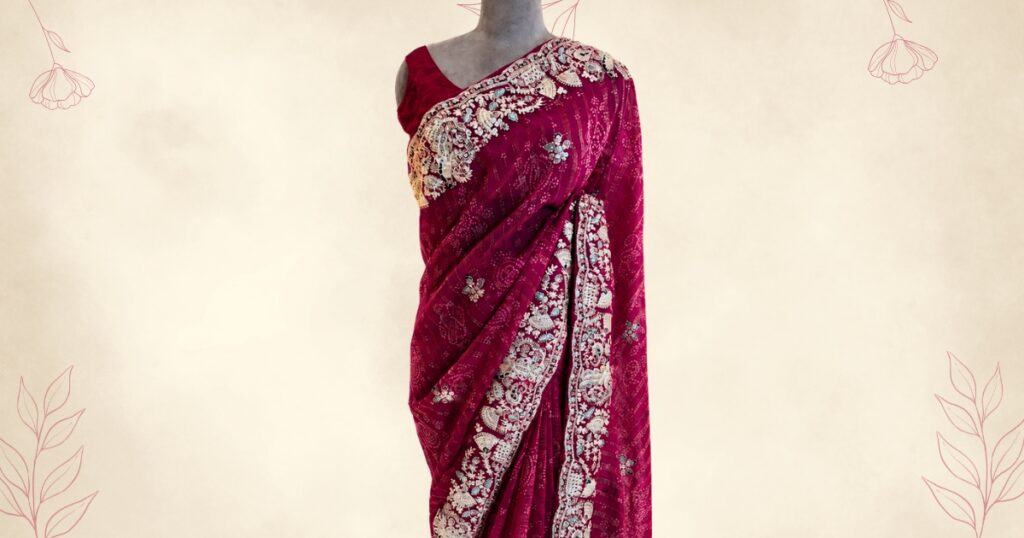
Kaccha gota is a finer, more delicate version that gives a softer shimmer, while lumpy gota creates raised, textured details. A purple munga saree with lumpy and kaccha gota work, for example, shows how the two together can add depth without making the saree heavy. On a real handwork piece, look for small, even stitches holding each piece of gota in place, not glue marks around the edges.
Swarovski and stone work
Swarovski crystals and stones add sparkle that photographs beautifully at evening functions. The difference between good and average stone work is mostly in the setting.
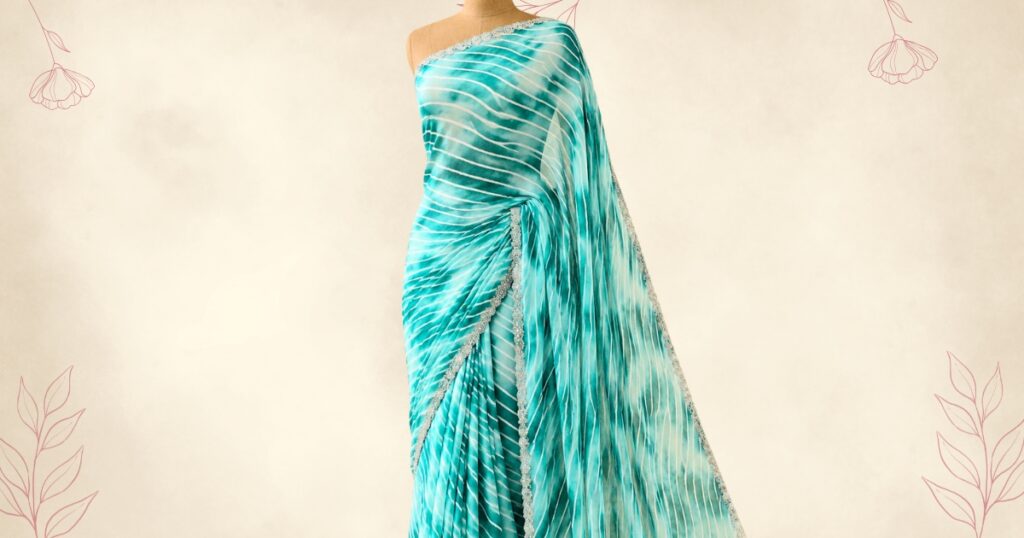
Hand-set stones are placed one by one, with a consistent pattern and firm adhesion or stitching. Look along the border for gaps, uneven spacing or loose stones. A gold crush organza saree with Swarovski work or a green georgette lehariya with a Swarovski border should feel secure when you run your hand gently along it, with nothing catching or wobbling.
Mirror, nalki and bead work
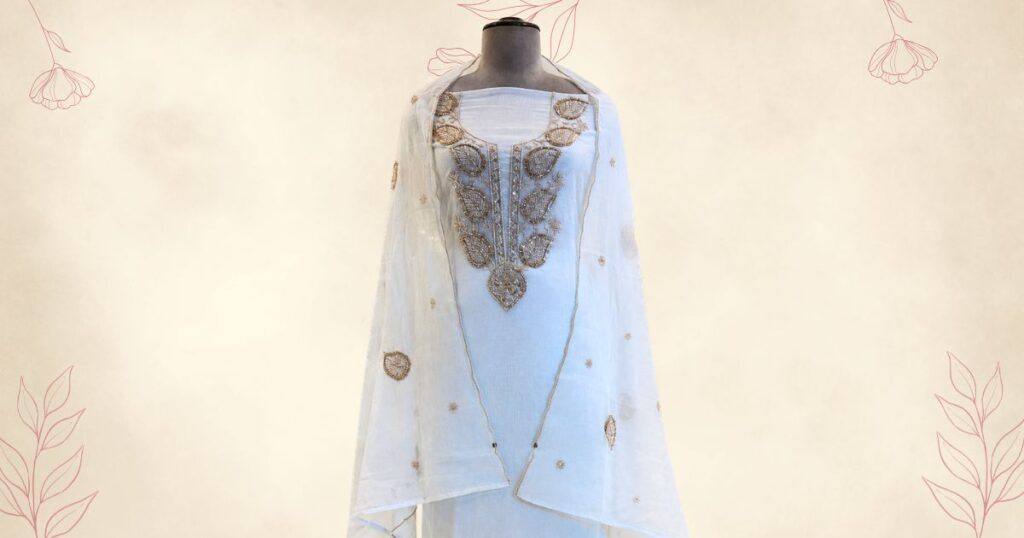
Mirror work involves small mirrors held in place by a ring of embroidery. In handwork, the stitches around each mirror are dense and neat, and the mirror sits firmly. In cheap imitations, the mirrors are often plastic and simply glued on.
Nalki and bead work use tiny tubes and beads stitched along lines or in clusters. Hand-stitched beads sit close together with no loose threads hanging behind. An orange yellow chiffon lehariya with hand mirror and nalki work is a good example of how these details catch light softly as you move.

Turn it over and check the back
The simplest test is to look at the reverse of the embroidery. Hand embroidery usually shows small knots, threads carried between motifs and a slightly irregular back. Machine embroidery tends to look very uniform on both sides, often with a backing sheet stuck behind it.
Neither is a problem in itself, but if a saree is sold as handwork, the back should look like human work.
Wearing a handwork saree well
Let the work be the focus. Choose a simple blouse in a matching or contrast solid colour, and keep jewellery balanced. If the border is heavy, skip a big necklace and wear statement earrings instead.
Be careful with bags, brooches and seatbelts that can catch on embellishment. Pin the pallu at the shoulder so it does not rub constantly against a bag strap.
Caring for handwork
Always dry clean heavily embellished sarees. Store them folded with a soft cotton cloth between layers, so the work does not press into the fabric. Never hang a heavy handwork saree for long, as the weight can stretch the fabric. Refold every few months to change the creases.
Also read
Shop the look at Radhisha
Shop handwork festive sarees with gota, mirror, nalki and Swarovski work at radhisha.com, with free shipping across India.

radhisha